

Highly regulated industries like international trade provide opportunities for entrepreneurs to compete globally. In the United States, one of those opportunities is the Duty Drawback Program. The Duty Drawback is a U.S customs program that allows for a 99% refund on import duties, taxes and fees, when imported goods are subsequently exported(or destroyed)1.
To explain the opportunity, let us assess it from the perspective of a popular e-commerce retailer,Nordstrom; when Nordstrom buys a t-shirt from Bangladesh, they will pay import duties(~ 30% of the original value of the shirt) to the U.S customs, now, when a Nigerian customer orders the same shirt from Nordstrom.com for example, the duty drawback program allows Nordstrom to file for a refund for the import duty that was originally paid.
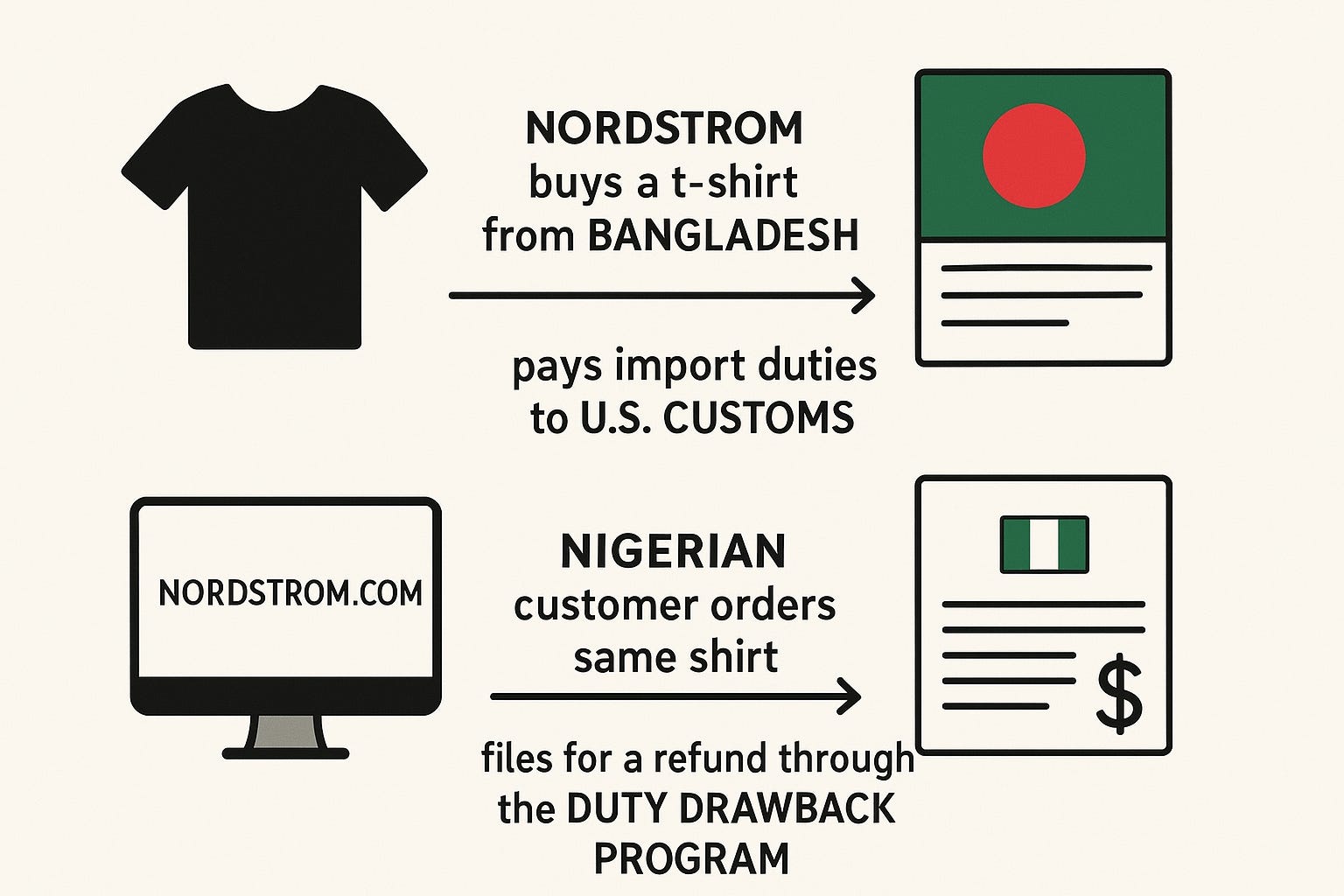
Considering the potential savings, you would think that every importer/exporter should be actively filing duty drawback, however, as of 2022 over $5 Billion2 remains unclaimed. I have two hypotheses for why this is the case; first is, the money doesn’t make a difference for businesses, that is obviously invalid, because entrepreneurs(especially Americans) never leave money on the table. Second, the perceived cost of filing for a refund is greater than the refund itself - this is a plausible reason. The keyword here is perceived because truth be told, claiming a duty drawback is not an easy task, in fact, dealing with the U.S customs for anything is not easy.The CEO of Flexport, Ryan Petersen, in an interview3 mentioned that a mistake as simple as classifying4 an item wrongly could take months to fix.
Now back to the duty drawback regulation, it has some interesting clauses that can make filing for a claim daunting, moreover, CBP regards duty drawback as a privilege not a right5. I have categorized these costs into three buckets:
Filing Cost: The US customs receive duty drawback claims through an electronic portal, and depending on the technology-saviness of the claimant, there exists an extra cost needed to facilitate these submissions electronically. Duty drawbacks are time-bound, they can only be filed for export(destroy) transactions that occurred within 5 years, also the time between import and export must be within 3 years, meaning that the claimants also incur an extra cost to hire analysts that will ensure that the claims are filed within the time frame.
Relationship Cost: The exporter has the right to claim the import duty refund, but there is a disconnect because, most times, the importer is usually not the exporter. So there has to be mutual agreements between these parties. Now, imagine you are Amazon, that buys from thousands of importers before exporting to customers in 180+ countries, that is too many relationships to maintain, and that comes with a very expensive cost.
Evidence Cost: To file a successful duty drawback claim, the claimants must also prove without doubt that the goods are eligible for duty drawback with documentary evidence, that date back 5 years, sometimes longer. The documents include proof of importation and exportation, which, depending on the transaction, could be in electronic format or physical copy. There is another cost then of storing, fetching and preparing these pieces of evidence.
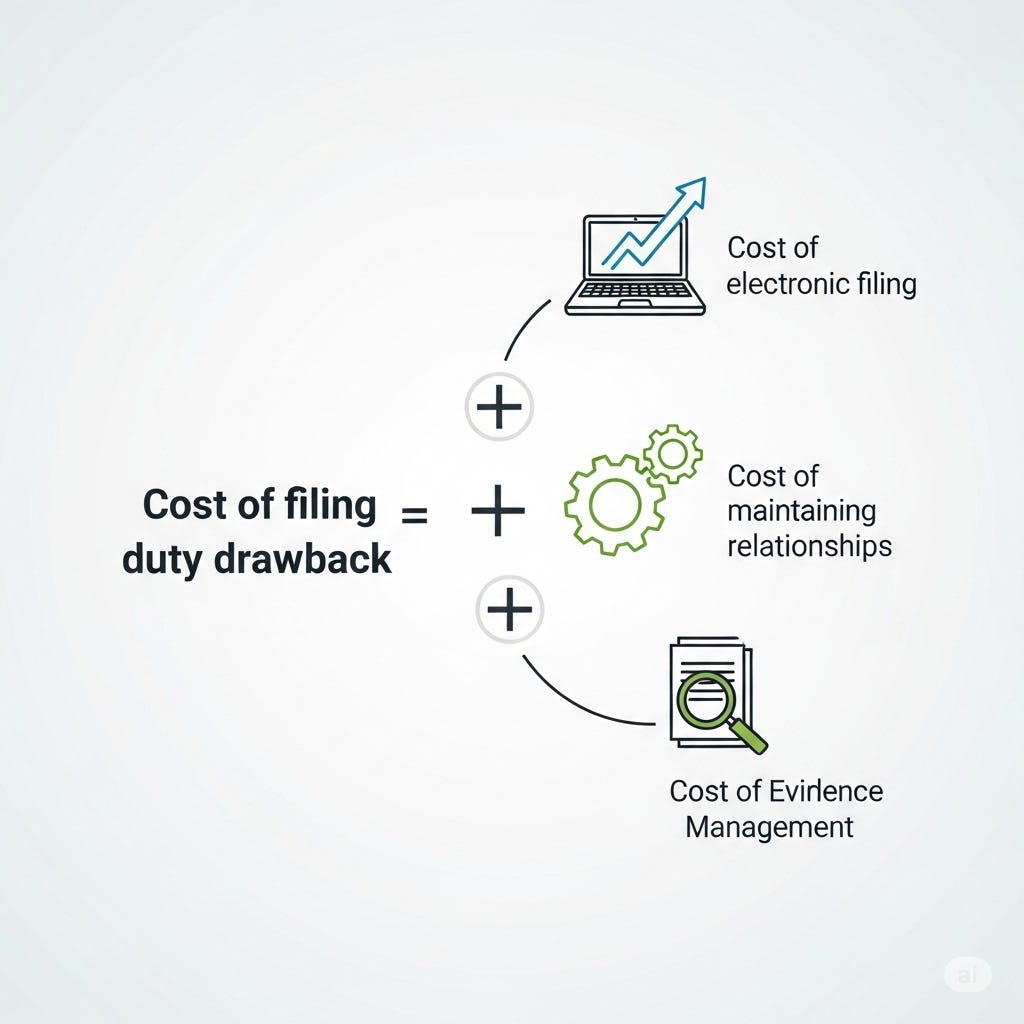
When these three costs are summed together, they may(or may not)be greater than the expected duty refund. As humans that make decisions based on perception, it is possible that the importer/exporter would forfeit the opportunity and not file for the duty drawback claims.
However, it is 2025 and we live in the world of AI agents, where difficult workflows can become autonomous, and can be implemented from start to finish. In fact there is a startup focused on helping its customers to file duty drawbacks; Pax AI. Pax files duty drawback with its software that turns trade data into refund claims for stakeholders in the international supply chain. The software can transform different data structures, be it in relational databases, in document formats or even as printed documents into refund claims that are then submitted to the U.S Customs and Border Patrol(CBP) for refund claims. They are part of the famous Y-combinator accelerator program.
These are my favorite types of AI companies, building for a disintegrated but niche workflow that translates into millions of dollars in opportunities for all of the stakeholders involved in the value chain. Pax is founded by Penny Chen and Christopher Lee. They are hiring engineers, you should reach out to them.
Learn more about the Harmonized Tariff Schedule.